Hospitals across the Barcelona-based C17 network, including Hospital Clínic de Barcelona and Hospital General de Granollers, are leveraging digital pathology to transform how cases are accessed, shared, and diagnosed. By implementing a scalable digital pathology solution, the network enables faster workflows, cross-site collaboration, and improved diagnostic confidence to support more timely and informed patient care decisions.

Hospital Clínic de Barcelona and Hospital General de Granollers, both part of the C17 network, are working together to improve access to specialized pathology services across the region. By adopting digital pathology, they are connecting expertise, streamlining workflows, and responding to growing diagnostic demand across multiple sites.
Hospital Clínic de Barcelona processes more than 50,000 biopsies annually, while Hospital General de Granollers contributes an additional 12,000–13,000 biopsies, alongside approximately 5,000 cytologies and 50 autopsies. Together, these volumes highlight both the scale of demand and the need for a more efficient, connected approach.
To address this challenge, both hospitals transitioned to digital pathology using Philips IntelliSite Pathology Solution. This enables cases to be distributed dynamically across the C17 network, ensuring that the right expertise is applied, regardless of location.
This connected workflow allows the network to balance workload, access subspecialty expertise, and enable remote collaboration between hospitals.
Workload surges within our network can be managed by providing remote assistance, and we can offer more specialized reference services.
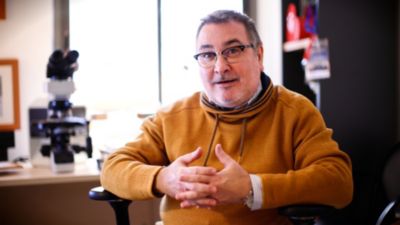
By digitizing slides and making them rapidly available on-screen, both hospitals have established a more standardized and efficient workflow.
Pathologists no longer rely on physical slide transport and can instead review, annotate, and compare cases using digital tools. This not only accelerates case review but also improves consistency across sites.
Our digital pathology workflow allows preparations to appear on the pathologist’s screen in less time, with no risk of deterioration or loss.
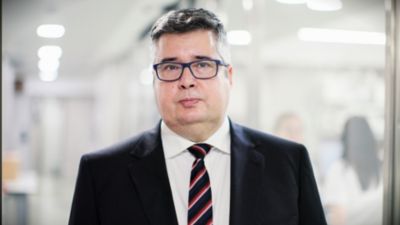
Barriers to adoption of digital pathology include concerns about the time involved in converting tissue samples to digital slides and the significant storage needs. With the solution used at Hospital Clínic de Barcelona, pathologists have discovered those concerns are unfounded. They use a fully automated Pathology Scanner SG300 that delivers high throughput with a 300-slide capacity and a high first-time-right rate. Each slide is scanned at the equivalence of 40 times magnification (0.24 um/pixel) for sharp, high-resolution images. “It is true that digital pathology requires scanning the preparations, which takes time,” said Adela Saco, M.D., Anatomical Pathology Specialist of Hospital Clínic de Barcelona. “However, since these are high-load, continuously operating scanners, digitization can be performed overnight. The next morning, everything has already been digitized.”
Digital pathology enables seamless collaboration across hospitals and multidisciplinary teams. Cases can be shared instantly, supporting consultations, second opinions, and multidisciplinary discussions. The digital workflow enables more effective collaboration across care teams by allowing cases to be shared easily during multidisciplinary meetings. The digital pathology solution aids in presentations to pathologist colleagues as well as other members of the care team. “For pathologists, this has been a turning point,” Dr. Saco said. “Before the integration of digital pathology, we could not present cases in committee meetings. This has transformed how teams work together, enabling more precise and timely clinical decisions. Now, we can make more precise treatment decisions because we can present cases more effectively and provide information in a more accurate manner.”
Before the integration of digital pathology, we could not present cases in committee meetings. Now we can provide information more effectively and support more precise decisions.
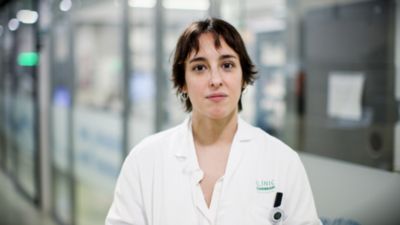
A common concern many hospitals have relates to storage and archiving, given the large data volumes associated with each digital slide.
This challenge is particularly evident at Hospital General de Granollers, where the scale of digital pathology operations highlights the need for scalable infrastructure.
To manage this effectively, the hospitals leverage cloud-based archiving, enabling them to scale storage without expanding on-site infrastructure while ensuring secure and efficient access to data across the network.
With digital workflows in place, both hospitals are building toward integrating AI and advanced image analysis tools. Philips digital pathology solution is interoperable with AI applications and other tools that increase efficiency and facilitate interpretation. “Previously, anatomical pathology was not linked to computer technology; cases could not be studied or integrated into systems that allow for predictive diagnoses or for training artificial intelligence algorithms,” Alonso said. “These algorithms can now assist in diagnosis, optimizing processes and speeding up the diagnostic workflow. The implementation process has been very smooth and straightforward, thanks to the Philips deployment team. In just one week, the system was stabilized and fully operational.”
Dr. Saco, Anatomical Pathology Specialist at Hospital Clínic de Barcelona added, “The speed and greater efficiency of these systems have a daily impact on the quality of patient care, as they allow for a rapid and often more accurate diagnosis. As a result, the most optimal therapeutic measures for the patient can be initiated as soon as possible.
Digital pathology has reshaped how pathology services operate across the C17 network. By connecting workflows, expertise, and data, the hospitals are improving efficiency and enabling faster, more confident decision-making.
Across the network, digital pathology enables:
Together, these capabilities help accelerate the path from images to answers, supporting high-quality patient care across the region.

